The Benefits of Writing Tech

I grew up as a writer, it was the one thing I was always comfortable with. As a kid, I claimed I was going to be a pharmacist, just like my dad. But he’d seen my math scores and knew better.

My earliest stories were written in pencil or pen in spiral notebooks. I had atrocious handwriting. Still do, actually. My dad gave me his college typewriter when I was ten, and suddenly my writing gained new clarity. The typewriter was probably twice my age, and it was one of those cheap models with no frills. Frills such as an exclamation point or the number 1. It had no correction ribbon, and whiteout became my new best friend. If I typed too fast the keys would stick together. The carriage return was completely manual. The shift key lifted up the whole carriage with a heavy clank, dropping it twice as loud. My skinny little fingers would sometimes get stuck between the keys, and when I look at it now I wonder that my ten-year old hands were able to bang away for hours at the thing.

The affordable home computer changed the world of writing forever, at least until we have a zombie/plague/asteroid apocalypse. Writers can now concentrate on creating rather than the agony of retyping their five-hundred page masterpiece for the sixteenth time because they’ve made some revisions. Typos are easy to fix. We have the luxury of cut and paste, spell check, and a printer conveniently located in our residence. Many of today’s writers didn’t have to endure the pre and early techno days. Others have locked these memories away behind a tightly locked door with a sign that says do not open until Armageddon. Well, except for Stephen King, who appears to have a fondness for Underwood typewriters.

It’s good to reflect on the changes in the past thirty or forty years simply because it is our heritage as writers. How can we know where we’re going, if we don’t know where we’ve been or how far we’ve come? And it’s good to remind ourselves, when we’ve got a virus or our hard drive has crashed, that there was a time when we didn’t have it so easy.

Early word processors, the dinosaurs, were an improvement over manual typing, simply because you could save your work. My first word processor was called Magic Desk, and it was a cartridge for the Commodore 64. I had to save each page separately. Cut and paste didn’t exist. The five-inch floppies were difficult to take care of, and disk cases were out of my price range. There was no saving to the hard drive in those days. Spell check involved keeping Webster’s close at hand.

Then there came such advancements as Word Star and Word Perfect, the DOS versions. Hitting the wrong key combination could be devastating in those days. What you saw on the screen was not necessarily what you got on printout, but there were a bundle of new features in this state of the art hardware and software. There would be no more manual underlining for me. Insert and type-over were a sheer delight, once I’d figured out which was which. And the cut and paste features were beyond my expectations. I met my first spell checker, and it was good.

With today’s word processors, the art of writing has become streamlined. We’ve removed some of the tedious and unpleasant tasks associated with editing and revising, other than working with the words themselves. We’re no longer required to have perfect spelling, though homonyms are still problematic and grammar checkers continue to suck. We have voice recognition software for those who have difficulty with typing. There are programs specifically designed for writers that help you organize your character, world, and plot details. Publishing continues to work through its massive upheaval, with electronic and print on demand options opening doors for a lot of writers who had no chance with the traditional model (and not because they’re bad writers).

Despite all these advancements, it is still essential for a writer to have a grasp of the language she writes in, or she’ll fail to tell the story she intends to. We still need to practice and hone our craft, trying new things and stretching once in a while to create things that are new and interesting. No matter how sophisticated the programming, technology alone will not make you a writer. It can only aid you in getting the job done. Writing itself has not necessarily gotten easier, even if the peripheral aspects have. That which is truly worthwhile is rarely ever easy, though it’s nice to be able to focus on the words and the story more than the mechanism for recording them.
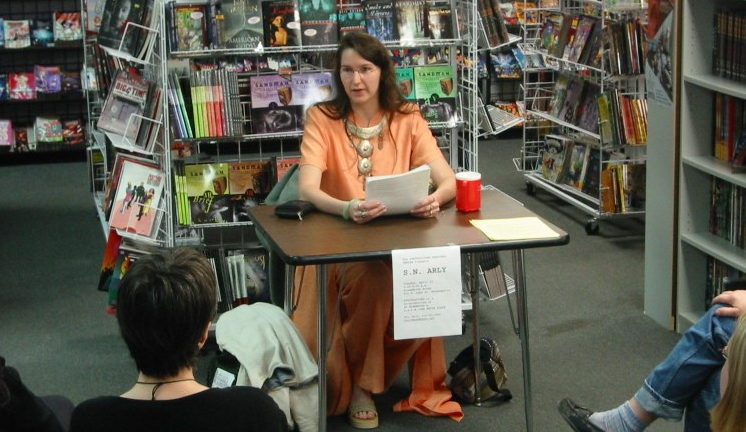
S.N.Arly Reading In Minneapolis – March 6, 2019

Do you like audio books or being read to? Join me as I read  from the young adult fantasy novella “Something Familiar.”  Follow a runaway shapeshifter’s quest for a safe home and a teen witch’s search for a familiar.

S.N.Arly sitting at a table at Dreamhaven Books and Comics
S.N.Arly Reading at Dreamhaven

When: Wednesday, March 6; 6:30-8:00 PM
Where: DreamHaven Books – 2301 E. 38th Street, Minneapolis.  Free parking is available.
This is a free event, open to the public.

DreamHaven carries science fiction and fantasy in comic, novel, picture book, and graphic novel formats.

The Speculations Readings Series is a production of SF Minnesota that features regular readings by speculative fiction writers, often local. 

For further information, contact Eric at eheideman@dhzone.com

For directions to DreamHaven, call 612/823-6161

The Continued Adventures of Writer Brain

Brain: Ahem.

Me: Yeah?  Oh hi.  Do you need something?

Brain: Me?  Naah.  I’m good.  But I think you need something.

Me (suspicious): Really?  I’m full up on things, just now, so no need to trouble yourself.

Brain: It’s no trouble.  Honest.

Me: Uuuuh.  I wouldn’t want to seem greedy.

Brain (radiating hearts and rainbows): It’s a gift!

Me: My birthday’s not for two months.

Brain: What, can’t I give you a gift just because I love you?

Me (stumped and terrified): Ergh.  Sure.  I guess?

Brain: Check out THIS!

Me: <Blink.  Blink.>

Brain: Isn’t it totally awesome?  It’s the best thing EVER, and it’s so perfect for you!

Me: WTF.  This isn’t even my genre.

Brain: Sure it is.  See the opportunity for angst?  That’s totally you.

Me (indignant): I don’t write angst!  

Brain: <Raised eyebrow>

Me: Okay.  So, some of my stories get a bit more… dark and tragic than I intend.  But angst isn’t even a genre.  And, look at this thing.  It’s a freaking beast.  It’s at least a novel.  Maybe two.

Brain (proudly): Yeah.  I know.

Me (resigned): Fine.  I’m just going to summarize this idea here, in my ideas folder –

Brain: Isn’t that the folder where ideas go to die?

Me: Uuuuh.  No.  No.  This is where totally awesome ideas go, when I need a little time to truly appreciate them and do them justice.

Brain: It looks like the folder where ideas go to die.

Me: I promise, it’s not.

Brain: If you say so.  You should probably back it up to the network… and your flash drive.  You know.  Just to be safe.


Check out all the Writer Brain shenanigans in reverse chronological order here.

Speed Writing #5 – Fairly Artistic

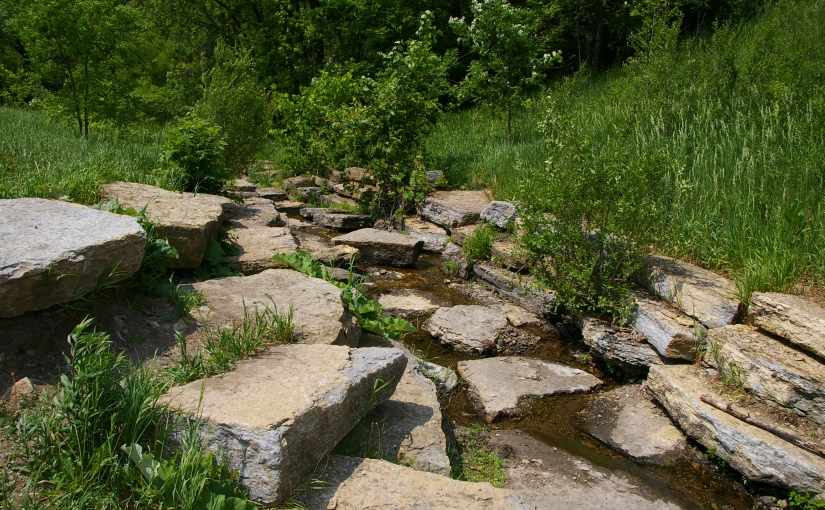
She looked down into the swiftly flowing water of the tiny stream, imagining her troubles flowing away with the water.  If they bumped into a couple of rocks and cracked along the way, so much the better.

“Excuse me –”

She shrieked in surprise, turning so fast her feet slipped on the gritty limestone.  Her arms pinwheeled desperately in an attempt to catch her balance.  She felt her hand hit something, then everything stopped for just a moment.

“It’s okay,” he said quietly.  “You’re not going to fall.”  Though a Germanic accent colored his speech, his English was perfect.

Continue reading Speed Writing #5 – Fairly Artistic

Art or Not

I’ve been told that in the Twin Cities you can’t swing a dead cat without bumping into a science fiction writer (and that the cat was probably a writer, too). It’s pretty much true, and its not a bad thing. It allows us to host a variety of conventions and makes it pretty easy to set up critique groups. We can discuss our work in the context of crafting and perfecting our art.

Unfortunately, fantasy, science fiction, and horror (which fall under the umbrella term of speculative fiction) are not usually considered art in our culture. These writers are labeled “genre writers” and are denied credit as real artists. A person who splatters her body with paint, then rolls around on a canvas is more likely to get funding than a science fiction writer (which is not to cast aspersions on the afore mentioned form of visual art). Evidently someone has decided that genre writers are not artists and what they create isn’t art. After all, if we were genuine artists we’d write poetry or mimic Faulkner, right?

I’ve been told that it must be easy to write science fiction and fantasy because I can just make everything up. I like to point out that the challenge lies in making the reader believe it. My peers and I use all the same elements of artistic, contemporary fiction (catchy beginning, well-developed characters, realistic dialogue, interesting plot, and a tidy ending) while setting our stories in places that may not even exist. In order for you to become invested in the story, to elicit an emotional response, we have to make you believe it.

According to Merriam Webster, art is “something that is created with imagination and skill and that is beautiful or that expresses important ideas or feelings.”

Like our culture, art is not stagnant. It is constantly evolving to meet the needs of a changing audience. While some past forms of art remain appealing today, others don’t. Painters and poets are obviously artists, but it’s critical to note that they aren’t the only artists.

There is no doubt that art enhances and improves our lives. Regardless of their genre, writers use their medium to explore the strengths and weaknesses of humanity and where our future may lay.

In this society where we have apparently deemed art unnecessary and yet also unaffordable, where we have defined art in such narrow parameters that few of us could actually meet, we have the audacity to judge past civilizations by their art. We look at their pottery, their buildings and their writings. We build up scenarios about them and their culture. We figure out what they ate for lunch. 

I wonder how we will measure up when examined by those who follow us.

Speed Writing #4 – Night Swimming

There was nothing more perfect than gliding through the water at two in the morning, under a cloudless sky with a sliver of a moon.  This was when everything was calm.  The annoying mosquitoes and even more annoying drunks had all gone to sleep or passed out.  The bats, who were active early on, had settled in for a few hours.  The surface of the lake was still, glassy, with the exception of the small ripples spreading out from her body.

Having a restaurant and bar right on the edge of the lake was a novelty, though it had worn off after the third or fourth karaoke night.  It wasn’t that she minded the music.  She was all for expressions of happiness.  But the off key howling of hammered patrons hurt her sensitive ears.  Her evening swims had moved later and later.  And it seemed she had finally stumbled upon the perfect time.

Continue reading Speed Writing #4 – Night Swimming

Character Flaw

Character development is one of the keys to keeping a reader engaged in a story. Believable characters intrigue the reader, move the story along, and provide a guide for the journey. Unbelievable characters can kill a story.

Like most artistic endeavors, there isn’t one right way to go about this, but there are some guidelines that can help you, especially if this is a weak aspect of your writing. A realistic character has to have some flaws, some room to grow, or they quickly become boring and stagnant. There is also the risk that the reader will have no connection to a godlike main character and will therefore not particularly care if she nearly dies while saving the world from destruction. Again. Worse still, are characters who accomplish everything they set out to do, easily and on the first try.

The challenge is to choose flaws that are not too overwhelming, detrimental, disgusting or silly, unless that’s the kind of story you’re telling. You can’t just throw in a bizarre behavior and say, “My character will only drink beer that is darker than her hair. She has a flaw and is therefore believable!” Flaws need to fit the personality of the character. This may seem obvious, but it’s sad how frequently you find characters with flaws that just don’t make sense. If you’re having trouble logically attaching flaws to your character, you may want to take a look at the character’s back story. A character’s history can influence the development of weaknesses and flaws.

If you’re having trouble coming up with realistic flaws, take a look at people you know, and think about the things they do that make you wonder if their head is properly bolted on. Focus on the things they do that are annoying, troublesome, or undesirable. Co-workers and family members are great for flaw farming (just don’t tell them I suggested it).

None of us are perfect, and our flaws are part of who we are. Having your characters defeat their flaws doesn’t need to be the goal of your story; it doesn’t even need to connect to the plot. Having your characters work toward their goals, despite their flaws, can bring them alive on the page. And that’s often what hooks your readers, maintains their interest, and brings them back to your next story.

Random Advice for Young Writers

In 2018, I got an ask over on Tumblr requesting advice for young writers, so here you go.

Read a lot, figure out what kind of stories you like, what styles you like, and what authors do a really good job at what you want to write.

Write a lot. Some of it will not be worth sharing, and that’s okay; you still learn from your failed stories, they still fulfill a need for experience.

Once you know what genre(s) you like to write, find a community of writers who are involved or interested in that genre.  This actually matters because there are lots of conventions or practices that don’t transfer from one genre to the other, and there’s ugly genre bias. My community includes going to science fiction and fantasy conventions, being in a writers group, and meeting writers online.  We talk shop.  We commiserate.  We celebrate each other’s successes.  And we bounce ideas off each other.

Look for feedback from people who can actually tell you what’s wrong with your work (structurally and grammatically). Really listen to them, unless they’re tactless jerks who take joy in verbally beating you up (dump those folks immediately); no matter what feedback you get, in the end it’s your story and some advice won’t be useful for what you’re trying to do.  Learn to give this same kind of feedback to others – it makes you a better self editor.

The traditional publishing world is harsh and ugly, so take heart in the fact that there are other options available now that weren’t available when I was starting out.  You can do your own thing in your own way. 

If something is too good to be true, step away from it.  It’s a scam.

It’s okay to ask other, more seasoned writers for help figuring out terms of service and contracts (most of us can’t afford lawyers for this, so we learn how to read these).

Embrace rejection.  It’s a part of being an artist, and it proves you’re doing what you can (writing and putting stuff out). You can’t always hit the right editor, with the right story, at the right time. 

Finding Motivation

I’m not going to lie.  This can be really hard at times, but there are also times when you’re going to be wickedly motivated to write stuff. 

Writing what you want to, is the best way to stay engaged, especially if you’re not being paid to do it.

Explore new places for inspiration.

Try new things in your writing so you can learn more.  This is fun and helps you grow.  The first time I wrote something with the goal of making the reader cry, and I succeeded, I was so happy, because that was hard for me to evoke at the time. But understand that you won’t always succeed on your first try. I spent a year dumping experimental stories on my writers groups as I tried to get a better understanding of plot. Some were great. Others were really not.

Writers groups with deadlines can be great motivators.  Or writing prompt challenges.  Or blogs with regular updates.

Getting Your Writing Out There

There are a lot of ways to do this, some better than others.  The key is that you want to make sure you keep your intellectual property rights.  This means you need to read those terms of service if you’re participating in an online forum.

Submit stories to magazines that print your genre.

Submit stories to reputable contests (many contests are not reputable).

Post stories on your blog.

If you’re middle or high school aged, the New Voices Young Writers contest is highly recommended by a friend of mine.  You may also find Writing Science Fiction and Fantasy useful if that’s a genre you enjoy.

Clothing Resources

Updated on April 7, 2022

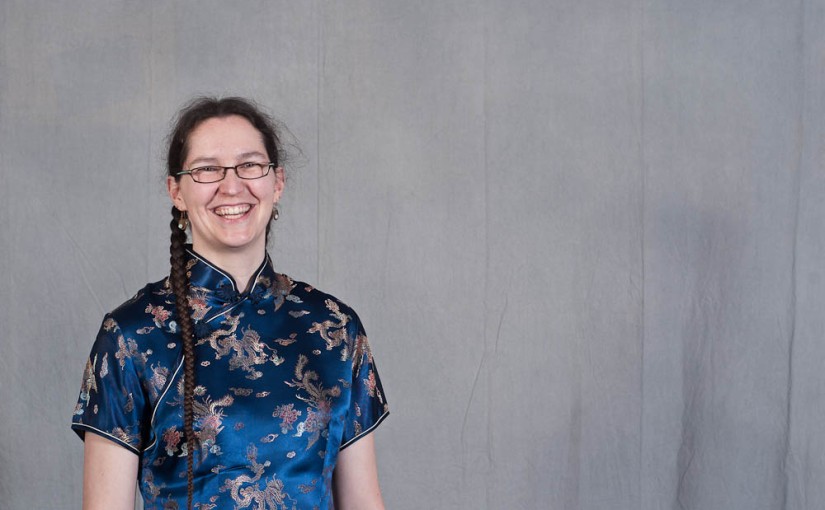
Many years ago (in 2000) I was writing a story that took place in a magical analog of China.  In an effort to incorporate Chinese culture I did a boatload of research, but you know what I couldn’t find?  Clothing.  Sure, everyone mentioned dragon robes, but that was it.  And I was pretty sure that the common folk weren’t wearing those.  Searching “traditional Chinese women’s clothing” over lunch brought up all sorts of pictures of naked white women.  While I was at work.  Fun times.  I ended up having a university friend borrow a book I couldn’t get access to.  It was fantastic, but this was a really slow process.

The internet has evolved a bit since then, though I’m sure there’s lots I’m missing in historical and world textiles. Most notably, I don’t have a lot of good resources on traditional clothing from the Middle-East or the many countries and cultures of Africa (which people online seem to think is one country, rather than a continent with many distinct countries and cultures).  As I hunt down some of these missing pieces, I’ll add them in.

Continue reading Clothing Resources

Teeth in Soft Places

Bee was a vampire teddy bear.  While his plush siblings clamored to frolic with children in the sun, he preferred the shadows and shady areas.  It wasn’t that he was in danger of bursting into flames or abruptly deteriorating, because that’s one of those vampire myths that just isn’t true.  He was simply of a darker nature and preferred a habitat to match.  He often found himself grossly misjudged by his appearance.  Baby blue fur and a pelt-matching satin necktie did not fit the stereotype of a vampire.  Sharp functional fangs didn’t fit the expectations of a teddy bear.

No other vampires were produced at the facility where he was made, and it seemed his state was accidental.  Still, quality control had passed him through, possibly because a despondent man was responsible for ensuring that each plush animal, of the type produced that day, was as free of flaws as the next.  The man never had his own teddy bear, and had since been conditioned to believe he didn’t need one. Despite his on-site training, he was not an expert on appropriate features for stuffed animals.

Continue reading Teeth in Soft Places