Data Loss

Note: while I reference writers here, this applies to many other artists who produce projects that can be stored in a digital format (music, visual, film, etc).


The writer has a multitude of fears. For non-writers this statement may conjure a general list including failure, rejection, creative blocks, and not being taken seriously. While these may indeed cause some concern for a writer, they are nothing compared to the king of all fears, data loss. Some of us live blissfully in denial, unaware how terrifying it is, until we experience it.

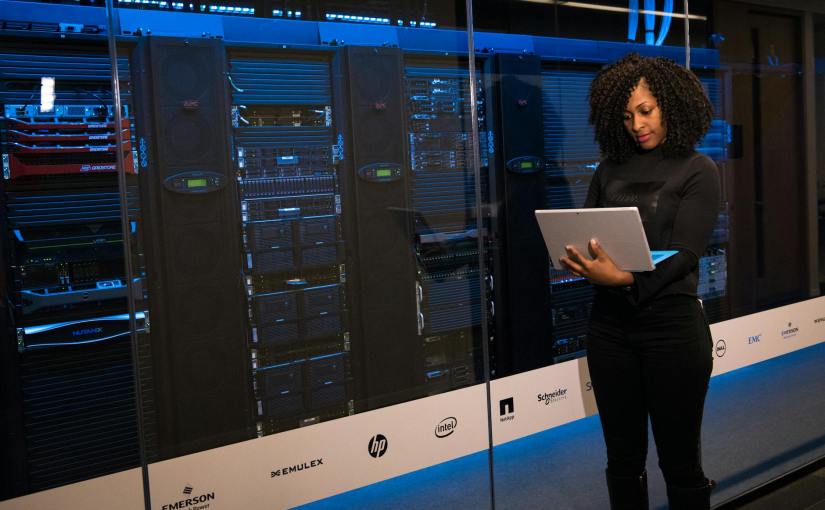
The loss of stories, research, and supporting documentation comes in many forms, flood, fire, burglary, but the most common is a computer failure of some sort. The computer is an essential tool for most writers. Computers, like all machines, eventually wear out. Any machine can have a defective part, causing a malfunction at any point during use. If your machine is portable and travels with you, the risk of damage or theft increases. So where does that leave the writer when the parts go bad and the machine fails?

Your actions will determine if this is an inconvenience or Shakespearean-level tragedy.

Save early, save often; it’s a maxim that has stuck with us since the early days of personal computers. Often this means saving to the hard drive in case you lose power or the program experiences a random error. After all this time, autosave still kind of sucks. But just how reliable is that thing that makes all those whirring noises when you open and save files? Hard drives are a lot less touchy than they once were, but it’s still not a question of if your hard drive will fail, but a question of when.

Saving to the hard drive alone isn’t enough. Fortunately, there are a number of ways to back up your data, with network, USB drive, CD/DVD, and cloud being pretty popular. How often should we to time out of our writing schedules to make these important back ups? Daily? Weekly? Monthly? If not done often enough, you’ll lose some of your changes, or maybe your newest projects when your hard drive screeches to a halt. We each have to decide how much loss we can live with, and then pick a process we’ll actually follow through with. Having the plan and not using it will just make you hate yourself all the more when someone breaks into your house and takes your computer. Let’s try to avoid the self-loathing, shall we?

A historian friend of mine introduced me to the acronym LOCKSS – lots of copies keeps stuff safe. I’ve used this to develop my backup process. Every time I write, I back up my work on a USB drive that goes everywhere with me. I have an in-home network that I back up to as well, though not as frequently as I could, mostly because it’s currently a manual process. Periodically, I save to an external hard drive that I hand off to my parents, who live in a different city.  In the last year, I started monthly backups to a cloud drive.

Remember, if your backup plan is too complex or too time consuming, you won’t actually do it. And if you don’t actually do it, we’re back to the self loathing.

Save early, save often, and find a back up method that meets your loss threshold and realistic willingness to put forth effort. When your hard drive makes clicking noises sounding like a very slow turn signal, I hope you can sigh with resignation instead of sobbing with despair.  I’ve done both, and the one is infinitely preferred over the other.

Speed Writing #7 – Intimidation Gone Awry

I leaned against my elbows on the high top table and gazed at the stage.  The between set curtain was still down, and I could see tennis shoes moving back and forth while the roadies set up for the next band, and real reason I was even here.

Clubs were not my scene, but once in a while there was a band I liked enough to endure the crowds and noise.  The Fratellis fell into that camp, so here I was, at First Avenue, by myself, waiting.  At least no one had spilled their beer on me, and my feet were relatively unscathed so far.  Unlike my friends, who dressed up to go out, I preferred to wear clothes I didn’t care about.

I felt the table jiggle a bit and turned my head to see the guy who’d taken the stool next to me.

“Is it okay if I sit here? ” he asked.

I shrugged.  “It’s a free country. “  Usually sounding bored and disinterested worked on those few who decided to hit on me.

He looked puzzled.  “I mean, you’re not saving it for anyone or anything like that, are you?”

I shook my head.  “Nope. “

He smiled, and I cringed internally.  Instead of a friendly expression, it showed his ego, in all its glory.  Ugh.  I wondered if he practiced that one, thinking it looked sexy.  Then I wondered how many other women agreed with him, or at least went along with it.

Continue reading Speed Writing #7 – Intimidation Gone Awry

Peony

Birth does not always call attention to itself. It is not necessarily a thing of beauty. There is not always screaming, although sometimes that simply comes later.

The stainless-steel kitchen sink was half full of water so cold the bare sides above were fogged and condensing. The shiny silver faucet was dotted with sweat, and droplets slid one by one into the pool of water below. Two recently clipped peonies floated on their petal heavy heads, their stems sticking straight up in the air like some sort of backward bouquet. Small groups of ants gathered in the green cup where the stem joined the blossom. Some had climbed the stem to hang precariously on upside-down leaves. Floating lifeless in the water were the casualties who had not made it from their places deep within the flower before the deadly flood reached them.

Continue reading Peony

Even More Writer Brain

Brain: So you know that idea I just gave you?

Me: Which one?

Brain: This one, here, see?

Me: Oh. Yeah.  You’re not going to take it back are you?  I’ve started thinking about it and have some pretty good plans for developing it.

Brain: No need to worry.  I was just thinking…

Me (very quietly): Uh oh.

Brain: Do you remember this fragment of an idea?

Me: Yeah.  It’s cool, but I have no clue what to… oh… I see.

Brain: Neat how they fit together, eh?

Me: Yeah.  They do fit very nicely together.

Brain: I’ll just leave you to it.


Check out all the Writer Brain shenanigans in reverse chronological order here.

Historical Fiction Research

The following was sent as an ask on my Tumblr blog:
You have one of my favourite blogs on Tumblr! I just wanted to know if you have any tips for researching for historical/fantasy? I just can’t seem to get into it, even though it’s one of my favourite genres. Thank you so much! Again, awesome blog!!

Response:
Thank you so much for the super kind compliment, and for the ask!  I’m sorry it took me so long to get back to you.  I wanted to check in with my network of writers to see if any of them had recommendations I would have missed.  And they did!

I start out with articles that talk more about the process, and how to go about researching; these sometimes include good resources as well.  Below that I have some resources that can be useful, though this list is not remotely exhaustive. 

Continue reading Historical Fiction Research

Let’s Talk Dialogue

Dialogue can be one of the key structural components to a story, and there’s a lot of vague recommendations and misinformation regarding it. This is one of my writing strengths, and I’ve given it a lot of thought while helping other other writers use it effectively.

Purpose
There are a fair number of writers and writing instructors who insist dialogue has only two functions, moving the plot forward or developing the character.  I very strongly argue that this is an oversimplification, and misses several ways dialogue can serve a story.  In addition to these, well-written dialogue can ramp up or defuse tension, develop the world, contribute to description, and break up long narrative passages.

It’s hard to invest in characters and a conflict or argument they’re having, if you don’t see how it starts or how it is perpetuated through the characters’ actions and speech.  How a character speaks tells a lot about how they’re feeling about a situation or another character.  Rather than telling the reader that a character is awkward, nervous, or confident, you can show it with their word choices and the tags that support their speech.  It’s much more satisfying and visceral.

What your characters say to themselves and others tells the reader about the world, about the culture, and about what they are seeing.  The language you choose to use, can tell the reader that the atmosphere is casual or formal.

Quantity
There is no holy grail formula for determining the perfect amount of dialogue for all stories.  There are stories that work perfectly fine with no dialogue, though this is much less likely to work in a novel.  There are excellent stories and chapters that are almost entirely dialogue.  The key is to make sure that the dialogue, or lack thereof, fits the story.  

If what you’ve used provides the story with additional depth, it’s what you need.  If it feels extraneous or leads the story or reader off on undesirable tangents, it needs to be cut or revised.

Placement
Like any writing tool, dialogue needs to fall into the correct place in the story.  Misplaced dialogue is jarring, pulling your reader out of the story.  The content of the dialogue needs to be reasonable, and follow the logic of your characters.  This is something many writers have trouble with. They focus so much on using dialogue to push the plot that they throw in conversations that would never happen where or when they do.  Or they force the dialogue along a path that doesn’t make sense.  While it’s true real conversations don’t always logically go from point A, to point B, to point C, there needs to be some connection, some reason if your character is going to switch from talking about the weather to screaming about past injustices.  If there’s no connection, it feels artificial, and it needs to go.  If the conversation needs to get to a certain point, make sure the writing beforehand, or the internal narration during, lead us there logically.

Language
The language used in your dialogue can tell the reader a lot about the characters and the setting.  Word choices tell us if the characters are comfortable with each other, if they see eye-to-eye, or if they’re nervous.  They show us that the setting is formal or informal through the use of social cues and structure.  The words used by a character can tell the reader about their upbringing or past.  Do they say soda or pop?  Fireflies or lightning bugs.  Some of these are subtle, but all feed into the construction of your character.

Some instructors loathe contractions and insist they don’t belong in dialogue.  They are mistaken.  If the situation is formal, then it’s true your character may not use them.  If the character is not a native speaker of the language, they may not use contractions either. But a native speaker not using contractions when chatting at home or on the phone with their best friend feels stilted and fake.

I recommend caution when using vernacular, or phonetic representation of a dialect or accent.  Mark Twain was a master of this, and most of the rest of us just aren’t.  I’ve read a fantasy series where some characters speak with a Scottish brogue. Despite my familiarity with it, I have to speak the dialogue out loud in order to understand some of what they’re saying. This pulls me out of the story. Patois is perfectly understandable to my ear, but nearly impossible for me to read.  It’s not that this tool is unusable, it just needs to be used cautiously.  One of the reasons Twain was so good at it, was that he dialed the vernacular back, giving just enough to provide the world setting flavor without losing the reader.  

Test It
One of the best ways to determine for yourself if your dialogue is working, is to read it out loud. Does it sound like a real person? Does it sound like something the character would say, or does it sound like another character?  Read the entire story out loud. If the dialogue feels like it’s slowing the story or doesn’t flow, then it’s too long or misplaced.  If it feels natural and moves the story or its architecture (characters, world or plot), then it’s perfect.

Last Thoughts
Like character development, dialogue will add word count and page length. If additional length is a problem, you can truncate or summarize parts of longer conversations, particularly the parts that don’t significantly add to the story.

More Writer Brain

Brain: Soooooooo.

Me: Oh, hello.  What’ve you got for me today?

Brain: You know.  The usual.

Me (uncertainly): Errrrrr.  Best… story… ever?

Brain: And you think you can’t be taught.  Here.  Let me just lay this all out for you here…

Me (puzzled and concerned): This seems vaguely familiar.

Brain: I want you to pay particular attention to these character details.

Me: Uhhhhh.  Wait.  I see where this came from.

Brain: Pretty neat, eh?

Me: You came up with this entire thing based on like 15 words of banter on Tumblr with someone I follow.

Brain (proudly): Yep.

Me: No, no, no!  I can’t write this.  It’ll be obvious where it came from and I’ll look like a weird stalker or something.

Brain: Pffft.  You’re a writer.  Anyone you encounter, in either the physical or digital world has the potential to spark a story.  It’s what we do.

Me: I kinda feel like I should wear a warning label or something.  Not everyone I meet signed up for this.

Brain: Public domain, baby.

Me: I’m not worried about the legality.  I’m worried about the awkward social consequences.

Brain (soothingly): Don’t worry.  It’s not like they’ll read it.  It’s not like they’re a mutual or anything.  And nobody ever recognizes themselves in fiction.

Me: Ergh.

Brain: Now the world’s a bit underdeveloped, but I figured you could do that, since I already got you a character, descriptions, and a plot. 

Me: But… how can you do this off 15 words?  I mean, seriously.

Brain: Hey, if you think this is cool, you should see what I can do with a visual.  Or a smell.


Check out all the Writer Brain shenanigans in reverse chronological order here.

Artistic Inspiration

I’m going to be moderating a panel on artistic inspiration at Marscon on Friday. I’m one of those moderators who likes to prepare in advance, so I always arrive with a list of questions to help get conversation going and keep us on topic.

I’ve done this topic before, so I have a great starting point, but I’d hate to miss out on things that would be of interest to our audience. So what would you want to know about how writers and other artists find what helps them create?

Speed Writing #6 – Pannetone Papers and Poor Choices

He had just dropped the last of the bread dough into a pan when his cell phone started to vibrate in his back pocket.  He quickly brushed his hands off on the front of his apron before reaching back to blindly turn it off.  It was his five-minute warning.  She was like clockwork.  While she’d only lived in the upstairs apartment for about two weeks, he already had her morning schedule down.

“I’m going out for panettone papers, do you need anything?” he called to Elise, his boss and the owner of the bakery.

“Can you bring me two dozen eggs?”  She responded from behind the double-decker oven on the other side of the kitchen, her usual location this time of day.

“Sure thing.”  He pulled off his apron and hung it on a peg near the back door, then went out into the alley.   

When Elise first opened the bakery, she’d converted the old garage into storage.  Anything that couldn’t handle the heat of the kitchen, especially consistent heat day after day, and perishable supplies were kept out here.  In the winter, it was a nice break from the heat to walk the fifteen feet to the store room.  Normally the alley was quiet and empty.  But that had changed about two weeks ago. He hadn’t actually even met her yet, didn’t know her name, but somehow just the sight of her could turn even the worst day around. Sure, she was pretty, but it wasn’t just that.  There was something else about her, and he couldn’t quite put a finger on it.

Continue reading Speed Writing #6 – Pannetone Papers and Poor Choices

The Benefits of Writing Tech

I grew up as a writer, it was the one thing I was always comfortable with. As a kid, I claimed I was going to be a pharmacist, just like my dad. But he’d seen my math scores and knew better.

My earliest stories were written in pencil or pen in spiral notebooks. I had atrocious handwriting. Still do, actually. My dad gave me his college typewriter when I was ten, and suddenly my writing gained new clarity. The typewriter was probably twice my age, and it was one of those cheap models with no frills. Frills such as an exclamation point or the number 1. It had no correction ribbon, and whiteout became my new best friend. If I typed too fast the keys would stick together. The carriage return was completely manual. The shift key lifted up the whole carriage with a heavy clank, dropping it twice as loud. My skinny little fingers would sometimes get stuck between the keys, and when I look at it now I wonder that my ten-year old hands were able to bang away for hours at the thing.

The affordable home computer changed the world of writing forever, at least until we have a zombie/plague/asteroid apocalypse. Writers can now concentrate on creating rather than the agony of retyping their five-hundred page masterpiece for the sixteenth time because they’ve made some revisions. Typos are easy to fix. We have the luxury of cut and paste, spell check, and a printer conveniently located in our residence. Many of today’s writers didn’t have to endure the pre and early techno days. Others have locked these memories away behind a tightly locked door with a sign that says do not open until Armageddon. Well, except for Stephen King, who appears to have a fondness for Underwood typewriters.

It’s good to reflect on the changes in the past thirty or forty years simply because it is our heritage as writers. How can we know where we’re going, if we don’t know where we’ve been or how far we’ve come? And it’s good to remind ourselves, when we’ve got a virus or our hard drive has crashed, that there was a time when we didn’t have it so easy.

Early word processors, the dinosaurs, were an improvement over manual typing, simply because you could save your work. My first word processor was called Magic Desk, and it was a cartridge for the Commodore 64. I had to save each page separately. Cut and paste didn’t exist. The five-inch floppies were difficult to take care of, and disk cases were out of my price range. There was no saving to the hard drive in those days. Spell check involved keeping Webster’s close at hand.

Then there came such advancements as Word Star and Word Perfect, the DOS versions. Hitting the wrong key combination could be devastating in those days. What you saw on the screen was not necessarily what you got on printout, but there were a bundle of new features in this state of the art hardware and software. There would be no more manual underlining for me. Insert and type-over were a sheer delight, once I’d figured out which was which. And the cut and paste features were beyond my expectations. I met my first spell checker, and it was good.

With today’s word processors, the art of writing has become streamlined. We’ve removed some of the tedious and unpleasant tasks associated with editing and revising, other than working with the words themselves. We’re no longer required to have perfect spelling, though homonyms are still problematic and grammar checkers continue to suck. We have voice recognition software for those who have difficulty with typing. There are programs specifically designed for writers that help you organize your character, world, and plot details. Publishing continues to work through its massive upheaval, with electronic and print on demand options opening doors for a lot of writers who had no chance with the traditional model (and not because they’re bad writers).

Despite all these advancements, it is still essential for a writer to have a grasp of the language she writes in, or she’ll fail to tell the story she intends to. We still need to practice and hone our craft, trying new things and stretching once in a while to create things that are new and interesting. No matter how sophisticated the programming, technology alone will not make you a writer. It can only aid you in getting the job done. Writing itself has not necessarily gotten easier, even if the peripheral aspects have. That which is truly worthwhile is rarely ever easy, though it’s nice to be able to focus on the words and the story more than the mechanism for recording them.