Art or Not

I’ve been told that in the Twin Cities you can’t swing a dead cat without bumping into a science fiction writer (and that the cat was probably a writer, too). It’s pretty much true, and its not a bad thing. It allows us to host a variety of conventions and makes it pretty easy to set up critique groups. We can discuss our work in the context of crafting and perfecting our art.

Unfortunately, fantasy, science fiction, and horror (which fall under the umbrella term of speculative fiction) are not usually considered art in our culture. These writers are labeled “genre writers” and are denied credit as real artists. A person who splatters her body with paint, then rolls around on a canvas is more likely to get funding than a science fiction writer (which is not to cast aspersions on the afore mentioned form of visual art). Evidently someone has decided that genre writers are not artists and what they create isn’t art. After all, if we were genuine artists we’d write poetry or mimic Faulkner, right?

I’ve been told that it must be easy to write science fiction and fantasy because I can just make everything up. I like to point out that the challenge lies in making the reader believe it. My peers and I use all the same elements of artistic, contemporary fiction (catchy beginning, well-developed characters, realistic dialogue, interesting plot, and a tidy ending) while setting our stories in places that may not even exist. In order for you to become invested in the story, to elicit an emotional response, we have to make you believe it.

According to Merriam Webster, art is “something that is created with imagination and skill and that is beautiful or that expresses important ideas or feelings.”

Like our culture, art is not stagnant. It is constantly evolving to meet the needs of a changing audience. While some past forms of art remain appealing today, others don’t. Painters and poets are obviously artists, but it’s critical to note that they aren’t the only artists.

There is no doubt that art enhances and improves our lives. Regardless of their genre, writers use their medium to explore the strengths and weaknesses of humanity and where our future may lay.

In this society where we have apparently deemed art unnecessary and yet also unaffordable, where we have defined art in such narrow parameters that few of us could actually meet, we have the audacity to judge past civilizations by their art. We look at their pottery, their buildings and their writings. We build up scenarios about them and their culture. We figure out what they ate for lunch. 

I wonder how we will measure up when examined by those who follow us.

Character Flaw

Character development is one of the keys to keeping a reader engaged in a story. Believable characters intrigue the reader, move the story along, and provide a guide for the journey. Unbelievable characters can kill a story.

Like most artistic endeavors, there isn’t one right way to go about this, but there are some guidelines that can help you, especially if this is a weak aspect of your writing. A realistic character has to have some flaws, some room to grow, or they quickly become boring and stagnant. There is also the risk that the reader will have no connection to a godlike main character and will therefore not particularly care if she nearly dies while saving the world from destruction. Again. Worse still, are characters who accomplish everything they set out to do, easily and on the first try.

The challenge is to choose flaws that are not too overwhelming, detrimental, disgusting or silly, unless that’s the kind of story you’re telling. You can’t just throw in a bizarre behavior and say, “My character will only drink beer that is darker than her hair. She has a flaw and is therefore believable!” Flaws need to fit the personality of the character. This may seem obvious, but it’s sad how frequently you find characters with flaws that just don’t make sense. If you’re having trouble logically attaching flaws to your character, you may want to take a look at the character’s back story. A character’s history can influence the development of weaknesses and flaws.

If you’re having trouble coming up with realistic flaws, take a look at people you know, and think about the things they do that make you wonder if their head is properly bolted on. Focus on the things they do that are annoying, troublesome, or undesirable. Co-workers and family members are great for flaw farming (just don’t tell them I suggested it).

None of us are perfect, and our flaws are part of who we are. Having your characters defeat their flaws doesn’t need to be the goal of your story; it doesn’t even need to connect to the plot. Having your characters work toward their goals, despite their flaws, can bring them alive on the page. And that’s often what hooks your readers, maintains their interest, and brings them back to your next story.

Random Advice for Young Writers

In 2018, I got an ask over on Tumblr requesting advice for young writers, so here you go.

Read a lot, figure out what kind of stories you like, what styles you like, and what authors do a really good job at what you want to write.

Write a lot. Some of it will not be worth sharing, and that’s okay; you still learn from your failed stories, they still fulfill a need for experience.

Once you know what genre(s) you like to write, find a community of writers who are involved or interested in that genre.  This actually matters because there are lots of conventions or practices that don’t transfer from one genre to the other, and there’s ugly genre bias. My community includes going to science fiction and fantasy conventions, being in a writers group, and meeting writers online.  We talk shop.  We commiserate.  We celebrate each other’s successes.  And we bounce ideas off each other.

Look for feedback from people who can actually tell you what’s wrong with your work (structurally and grammatically). Really listen to them, unless they’re tactless jerks who take joy in verbally beating you up (dump those folks immediately); no matter what feedback you get, in the end it’s your story and some advice won’t be useful for what you’re trying to do.  Learn to give this same kind of feedback to others – it makes you a better self editor.

The traditional publishing world is harsh and ugly, so take heart in the fact that there are other options available now that weren’t available when I was starting out.  You can do your own thing in your own way. 

If something is too good to be true, step away from it.  It’s a scam.

It’s okay to ask other, more seasoned writers for help figuring out terms of service and contracts (most of us can’t afford lawyers for this, so we learn how to read these).

Embrace rejection.  It’s a part of being an artist, and it proves you’re doing what you can (writing and putting stuff out). You can’t always hit the right editor, with the right story, at the right time. 

Finding Motivation

I’m not going to lie.  This can be really hard at times, but there are also times when you’re going to be wickedly motivated to write stuff. 

Writing what you want to, is the best way to stay engaged, especially if you’re not being paid to do it.

Explore new places for inspiration.

Try new things in your writing so you can learn more.  This is fun and helps you grow.  The first time I wrote something with the goal of making the reader cry, and I succeeded, I was so happy, because that was hard for me to evoke at the time. But understand that you won’t always succeed on your first try. I spent a year dumping experimental stories on my writers groups as I tried to get a better understanding of plot. Some were great. Others were really not.

Writers groups with deadlines can be great motivators.  Or writing prompt challenges.  Or blogs with regular updates.

Getting Your Writing Out There

There are a lot of ways to do this, some better than others.  The key is that you want to make sure you keep your intellectual property rights.  This means you need to read those terms of service if you’re participating in an online forum.

Submit stories to magazines that print your genre.

Submit stories to reputable contests (many contests are not reputable).

Post stories on your blog.

If you’re middle or high school aged, the New Voices Young Writers contest is highly recommended by a friend of mine.  You may also find Writing Science Fiction and Fantasy useful if that’s a genre you enjoy.

Change of Venue

Everyone needs a little change of pace now and again, and it’s doubly true for an artist. While many of us may find some measure of inspiration in our daily lives, there is little more energizing than a change of setting. Away from our usual locale, we may find ourselves less hampered by intrusions and extraneous activities and more able to give ourselves over to our muse. In the end, a trip away from home may be just what the doctor ordered to get a writer back on track and into a productive mindset.

Even as a child I enjoyed writing outside. While I can get a bit wordy and floral in my descriptions, I have always found nature to be a bit of a natural boost to my creativity.

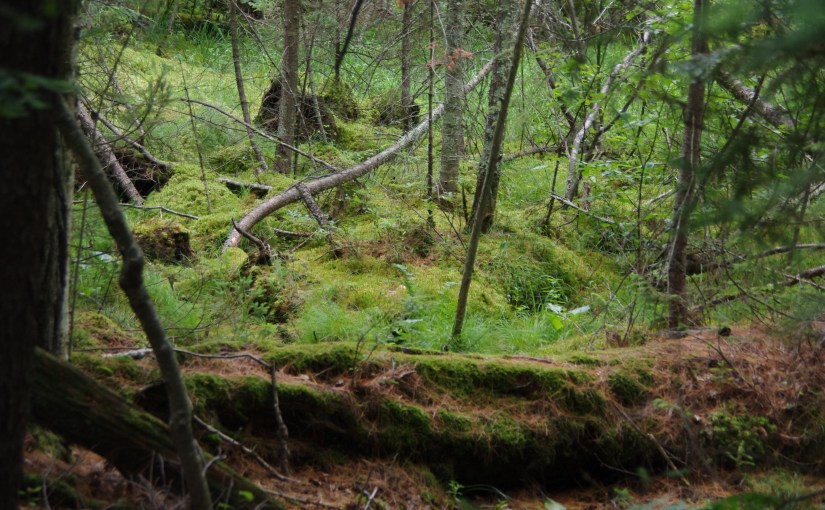
I’m currently sitting at the base of an old cedar in a grove of similar trees. I’m surrounded by wetland. The combination of water and layers of decomposing organic material makes the ground just soft enough to give a little under my feet. The mosquitoes have finally forgotten I’m here. Ants and daddy-longlegs are running around me in their usual scurry of daily life. In the distance I can hear the calls of a variety of birds, some chirp, others whistle, and the annoying ones squawk. When the breeze blows through, I can smell the lake and the pine turpines. When it’s calm, I can smell the damp earth and rotting pine needles. I saw two deer on my walk here. I am aware of but can ignore the occasional buzz of a motorboat speeding across the nearby lake.

In the past four days my productivity has increased dramatically. I wrote a short story in a single sitting, and started a second new story as well. I’ve edited two older shorts that I’ve been hanging on to for months. Sometimes editing is more difficult than creating, and the writer can face it with a foreboding sense of dread. There’s no one here to bother me, so I can work undisturbed in a place that motivates and inspires me.

Every artist runs into disruptions and life issues that compete with their art for time. It’s likely the single most aggravating aspect of being an artist. No one will let you alone to do your thing. Sometimes getting away from it all is not only a solution, but a necessity. How are we to succeed if we can’t get any work done? If we’re not creating something, we’re generally an unhappy lot. I know I don’t sleep well if I haven’t been writing. The ideas keep me awake. It’s in the best interest of my sanity, and my family’s happiness, that I get the chance to prove to myself every now and again, that I really am a writer, and I really would accomplish a lot if I didn’t have to be involved with the rest of the world.

For some it is the fast pace of a city, for others it’s the calm of wilderness, but for most of us, any change of venue is enough to get us going. When you start to get frustrated because you’re not doing the things you most want, it may be time to take a break from the rest of the world. Leave the dog with family, trade babysitting with the neighbors, be selfish and find the place that helps you write. And never forget that it’s there.

Adaptation

Artistic individuals often like to make the creative process more mysterious and confusing than it truly is. Many writers, for example, insist that certain conditions must be met in order to write. These may include silence, a locked door, a special location, a specific frame of mind, or even a well-rehearsed ritual.

Ask these sorts of writers to change their difficult ways, and they will vehemently insist that modification is impossible.

While it is true that our own inhibitions may color our writing techniques, those who are truly driven will adjust, should the need arise. The human species has an incredible ability to adapt to nearly anything. We can be found living in the coldest and hottest places on earth. We have figured out how to survive in the driest and wettest climates. We’re quite capable of compensating for our weaknesses, physical, mental, or otherwise. Everyone has heard at least one story of a physically handicapped individual overcoming perceived insurmountable odds. Likewise, we have all heard of at least one dyslexic who somehow managed to make it through high school without anyone ever knowing they were different.

We are resilient, although many of us seem think we are incredibly fragile. Our evolution and history have been complicated and dangerous, and it is our resilience and ability to adapt that have gotten us where we are today.

Change is difficult, and to be honest, most writers won’t do it without good reason. Really good reason. We like our habits, our rituals, and our crutches, although we don’t truly need them. They are like a comfortable old armchair or a favorite pair of jeans. They are the kind of possession that can never be stolen, however, they can be taken away.

I used to be the kind of writer who did everything with pen and paper. When I first discovered the typewriter, I realized that my writing could go quicker and be more legible if I was willing to adapt. I’m a fast writer, the kind who always comes back later to edit, so although typing was a complicated process I was willing to persevere. The word processor was really only a minor modification to my writing technique, making rewrites a lot easier. While the computer confined me to one location, the editing possibilities made it well worth the modification. I still picked up my pen and pad for the times I chose to write away for my computer.

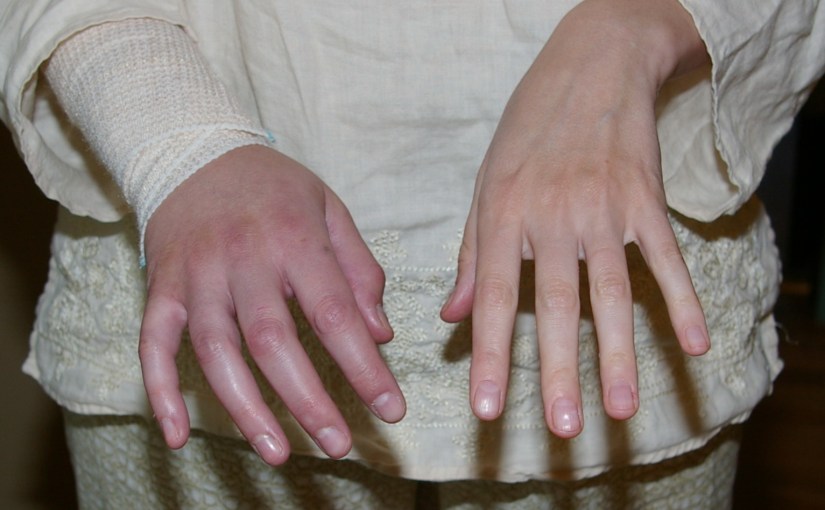
When I developed tendinosis, I was essentially forced to put down my pen permanently. I learned to type while wearing splints and straps, which greatly hampered by hand mobility. I learned to keep my keyboard in my lap. I also found out that taking breaks was a necessity if I wanted to be able to tie my shoes after day of writing. I still like to go on location and leave the confines of my cramped cluttered computer room, and spent many years unable to do so. As soon as I could afford to do so, I invested in a laptop which essentially had no other purpose than to take me places to people watch, world build, and write when away from home.

Eventually, further modifications to my writing technique were required. Between an office job and writing, I was doing more typing than my arms could handle, even with splints and breaks. A writer at heart, I have never been a particularly good speaker. I could barely type quickly enough to keep up with my mind, and my voice lagged woefully behind. Although I had been aware of voice recognition software since the mid-1990s, I had no particular interest in using it for quite some time. It was inaccurate. It wasn’t my “style.” I didn’t have a computer powerful enough to run it anyway. But these were all excuses. I’m a slave to my muse, and have learned to adapt. Starting in 2000 voice recognition became my primary method for writing initial drafts.

For a while these necessary adaptations resulted in my writing being more restricted. It could only happen in the same room, to avoid altering the acoustics and messing with the software.  I had to be alone or it felt like someone was reading over my shoulder. With time and practice, dictation came easier, and I no longer need to banish all living beings from the room, floor, or house. Changing my methods resulted in better control of my tendonosis which has made it possible for me to do a little handwriting or typing on a tablet if I want to work off-site. The path wasn’t easy, and I often resented the need for it, but in the end, it’s made me a better writer and stronger person.

This article was written using Dragon NaturallySpeaking and revised using a split floating keyboard once known as Interfaces by Cramer.

Casting Call

Without characters you have no story.  They function like objects in English language.  Without them we simply have adjectives and adverbs, and the occasional gerund, verbing about in a field of pretty flowers, or a city, or on a spaceship, or another planet.  Character development can mean the difference between the reader not finishing a story and thoroughly enjoying it.  

The keystone of any character, protagonist, antagonist, primary, secondary, or cameo, is that they feel real.  If your character has the depth of a cardboard cutout, your readers aren’t going to invest in their success, struggle, failure, or demise.  Physical description, personality, speech characteristics, back story, flaws and mannerisms are all elements that help make your character come alive on the page; any of these can be your starting point.

Description

To write good description, you’ll need some sort of picture (mental or otherwise) of the character.  If you don’t know what your character looks like, how will your reader?  Using real people as models can help when you’re in a bind.  If you have a vague idea, try doing an image search online with the characteristics you do know (brown eyed man, tall woman, traditional dreadlocks, etc) and see if you find some people who can help you flesh out your character’s physical appearance.  An image search for animals and mythical beasts can be helpful in the same way if your characters aren’t human.

Personality

Some writers feel compelled to complete complex worksheets and essays prior to starting a story.  If this works for you, it’s definitely an option, but it’s a lot of work, and it’s not necessary for every character.  You want a general feel for your characters’ personalities, but you don’t have to figure out their Meyers-Briggs placement or write lifeboat problem essays from their perspective. In the first draft, it’s a good idea to be somewhat flexible on personalities in case you need to modify things a bit for the story to work.  I find my characters’ personalities develop the more I write them.

Dialogue and Speech

How a character talks can tell the reader a great deal.  Does the character favor any specific words or phrases?  Are they using regional slang, oaths or incantations?  The types of words we choose can color the opinions and biases of the characters we create.  They also hint at the character’s past and give hints about the world. The dialogue of each character should feel like something they would say.  This doesn’t mean you have to make super specific speech patterns for each character, because that’s not how we talk in the real world.  However, you should pick words this character would use, and build their sentence structure to match their personality, education, and background.

Back Story

Believable characters generally do not spring fully-formed from the writer’s head to the paper like Athena from Zeus.  Good characters have experiences that made them who they are at the time of the story. I’m definitely not encouraging you to write a whole detailed novel version of their back story (this only becomes a never-ending backward trip through time), but you should know the basics, and perhaps have some key events in mind.  It’s noticeable when a writer knows more about the character than appears on the page; the story feels richer and the characters are much more dynamic and real. Back story includes everything in the character’s life that happened before they showed up in the story.  A character’s past will influence their fears, hopes, speech patterns, and biases.  Some pieces will be critical to the story, but others will just add flavor.  For most characters, you just need a rough idea of where they’ve come from and why they’re the way they are.

Flaws

Characters who are too perfect are boring.  We can’t relate to them, and their conflicts and victories are dull when compared to characters who make mistakes and have room for growth.  I have a short essay that goes deeper into character flaws, so I won’t belabor it here.

Mannerisms

These are the things that seem small, but add so much to making your characters feel real.  How does this character act when they are excited, sad, or angry?  While some characters may have some of the same reactions, they shouldn’t all respond identically all the time, unless they’re robots.  There are a number of ways your character could fidget to display embarrassment or boredom.  These are the little things you see in your friends and family while waiting at the doctor’s office or riding the bus.  Knee bouncing, hair twirling, nail biting, adjusting glasses, pushing sleeves up and down, lip biting, squinting, and slouching are all examples of things your characters can be doing.  Better yet if these show up in small two to five word additions to dialogue tags or narration.

Motivation or Goals

In addition to the above concrete features, it’s important that you know what drives your characters. Even if this information never makes it to the page, it influences how they develop and how they will interact with the world around them. In a short story, this may be the entire focus of the protagonist’s actions. In a novel it may be part of what helps the character move forward in the story line. In a series, this may remain the same throughout, or it could change and grow with your character.


Once your characters have reached a point where you’re happy with how they feel and look on the page, it’s a good idea to record the essential bits somewhere.  This is especially useful if you’re working on a lengthy series or if you may have to set the story aside for long periods of time.  This cheat sheet can help you get back into your characters’ heads, preventing jarring out-of-character actions. While character development is essential to any story, with less verbose versions required for shorter stories, don’t get so focused on getting all these details that you never start writing. For some of us, character is a natural aspect of writing, and for others, this is more of a struggle. This is actually my starting point for any story. I get an idea for a character, then have to figure out their story. You don’t have to get it perfect in your first draft.

Acceptance

In February 2000, I received my first acceptance letter. I signed my first contracts. I bounced off the walls for about a week. At some point during the great hullabaloo, it occurred to me that the person who sent me the letter was essentially just doing her job. She probably dropped it in the mail without much fanfare. How ironic that so simple a task could, just a few days later, cause such a stir. Like many writers, I framed the letter. I had a party. I fretted over how exactly to word my thank you letter. I puzzled over the proper way to list publishing credits in future cover letters. It was absolutely fabulous, and I loved every minute of it.

While I maintain that publication isn’t necessarily the mark of exceptional writing, it is the goal of many writers. For some of us it’s a form of validation in a culture that doesn’t reward artists. For others, it’s a benchmark, a means for measuring one’s career. For the really lucky ones out there its simply a part of their profession. For any writer who has spent years pursuing this goal, receiving that first acceptance is the absolutely most exciting experience. I honestly don’t think anything else could beat it. This is probably due to the fact that the first acceptance is often a bit of a surprise.

So, how can an acceptance possibly be a surprise to the writer who has been submitting manuscripts for years? Easy. Rejection becomes familiar after a while. It’s part of the territory. If you’re working hard, and have multiple stories to send out, rejection letters accumulate fairly quickly. I have an uneasy truce with numbers so I’ll not share any here. Suffice to say that you learn to look forward to those return envelopes and e-mails. “Did I manage a personal reject this time?” I always wonder as I review the return address. It’s turned into a kind of game for me to try to guess what story I sent out (especially for those long response times that make it hard to remember).

A writer has only so much control over the acceptance process, and it lies primarily in marketing and submitting one’s stories. If you never send out a manuscript, you’ll never be rejected but you’ll never be accepted either. A lot of it depends on hitting the right editor at the right time. Try as we might, we can never be sure when the right time is. The right story to the right editor at the wrong time generally results in the “Loved this, but I got 75 dog stories this month,” kind of rejection.

You never know which story is going to make your first sale, and that adds to the suspense of the whole business. I was genuinely surprised that this particular story was mine. I love it, don’t get me wrong. I love all my stories. It’s just not as powerful or as strong as some of my other work. It doesn’t have a message of any kind. It turned out a bit sillier than I’d planned. In effect, it’s a little like bubble gum. Fun with no nutritional value.

I was dismayed to find that not everyone was excited by my news. There were some who just assumed I would be getting published because it was what I had set out to do. Sounds complementary, but it stemmed more from misunderstandings about the publishing world than utter confidence in my abilities.

Exactly a week after Acceptance Day, I had a Triple Rejection Day. It was a good reminder that I still had a lot of work to do if I want to make a career of this.