Generative AI is an Ethical Can of Snakes, Not a Tool for Making Art

I’ve seen posts online arguing that text generative AI1 is just a tool, the way a paintbrush or a keyboard is a tool, and that writers2 can and should use it as needed. I’ve seen arguments justifying the use of generative AI to make art accessible to disabled creators. I’ve heard people claim that we should normalize the use of generative AI and stop shaming people who use it.

I counter with a solid fuck no on all these fronts.

There are a lot of problems with the “it’s just a tool” argument. With keyboards and voice recognition, you’re still selecting your words, putting them in order, and moving things around. You know, the act of writing. You’re making stylistic decisions about the use of language (not to mention setting, description, character, and plot). You are calling all the shots. If you aren’t choosing your own words and making your own sentences, you aren’t writing.

The suggestion that generative AI makes art accessible is inherently ableist and hideously offensive. This suggests that disabled people don’t deserve to truly create their own art, and the best they are capable of is the distilled mundanity of generative AI. True adaptability tools allow you to make all those decisions about sentence structure and language use. They allow you to create, but often with an alternate method of inputting or recording it. Voice recognition software is such a tool, while generative AI is an insult to artists. Disabled artists deserve tools that help them create what’s in their minds, not what the large language model limits them to.

Generative AI is built on the stolen intellectual property of writers (authors, journalists, and bloggers) in all stages of their careers. Their works have been used to train or program gen AI to sound realistic and contemporary. But those authors didn’t consent to this use. It is an obvious copyright violation. If you’re using gen AI you’re participating in theft of your fellow authors’ work and claiming that work as your own. Normalizing the theft of intellectual property is insane, and you should be ashamed of yourself if you use generative AI.

Writing, as any art, requires devotion and time to build the skills you need. If you don’t really want to invest the effort, you aren’t a writer, and that’s okay. Not everyone wants to be or should try to be writers. Using generative AI isn’t a shortcut to becoming a writer; it’s a twisted and unethical cosplay of being a writer.


  1. Generative AI and analytical AI are not the same thing. ↩︎
  2. All the things noted about writing have parallels for visual art (pictures and movies) as well as music – using generative AI for any of these doesn’t make you an artist. ↩︎

For more information (and links to supporting documentation) on the ethical issues related to the use of generative AI, please check out There is Currently No Ethical Use of Generative AI by The Write Mann (aka me in freelance writer and editor mode).
Change of Venue

Everyone needs a little change of pace now and again, and it’s doubly true for an artist. While many of us may find some measure of inspiration in our daily lives, there is little more energizing than a change of setting. Away from our usual locale, we may find ourselves less hampered by intrusions and extraneous activities and more able to give ourselves over to our muse. In the end, a trip away from home may be just what the doctor ordered to get a writer back on track and into a productive mindset.

Even as a child I enjoyed writing outside. While I can get a bit wordy and floral in my descriptions, I have always found nature to be a bit of a natural boost to my creativity.

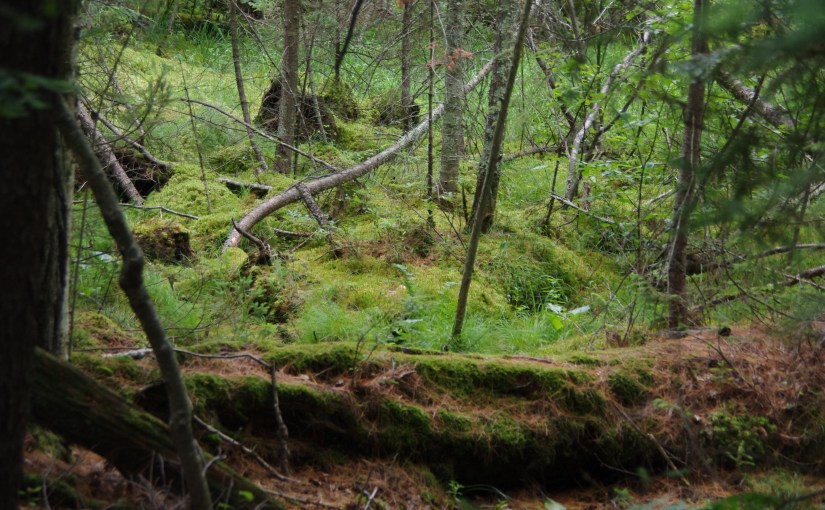
I’m currently sitting at the base of an old cedar in a grove of similar trees. I’m surrounded by wetland. The combination of water and layers of decomposing organic material makes the ground just soft enough to give a little under my feet. The mosquitoes have finally forgotten I’m here. Ants and daddy-longlegs are running around me in their usual scurry of daily life. In the distance I can hear the calls of a variety of birds, some chirp, others whistle, and the annoying ones squawk. When the breeze blows through, I can smell the lake and the pine turpines. When it’s calm, I can smell the damp earth and rotting pine needles. I saw two deer on my walk here. I am aware of but can ignore the occasional buzz of a motorboat speeding across the nearby lake.

In the past four days my productivity has increased dramatically. I wrote a short story in a single sitting, and started a second new story as well. I’ve edited two older shorts that I’ve been hanging on to for months. Sometimes editing is more difficult than creating, and the writer can face it with a foreboding sense of dread. There’s no one here to bother me, so I can work undisturbed in a place that motivates and inspires me.

Every artist runs into disruptions and life issues that compete with their art for time. It’s likely the single most aggravating aspect of being an artist. No one will let you alone to do your thing. Sometimes getting away from it all is not only a solution, but a necessity. How are we to succeed if we can’t get any work done? If we’re not creating something, we’re generally an unhappy lot. I know I don’t sleep well if I haven’t been writing. The ideas keep me awake. It’s in the best interest of my sanity, and my family’s happiness, that I get the chance to prove to myself every now and again, that I really am a writer, and I really would accomplish a lot if I didn’t have to be involved with the rest of the world.

For some it is the fast pace of a city, for others it’s the calm of wilderness, but for most of us, any change of venue is enough to get us going. When you start to get frustrated because you’re not doing the things you most want, it may be time to take a break from the rest of the world. Leave the dog with family, trade babysitting with the neighbors, be selfish and find the place that helps you write. And never forget that it’s there.

Adaptation

Artistic individuals often like to make the creative process more mysterious and confusing than it truly is. Many writers, for example, insist that certain conditions must be met in order to write. These may include silence, a locked door, a special location, a specific frame of mind, or even a well-rehearsed ritual.

Ask these sorts of writers to change their difficult ways, and they will vehemently insist that modification is impossible.

While it is true that our own inhibitions may color our writing techniques, those who are truly driven will adjust, should the need arise. The human species has an incredible ability to adapt to nearly anything. We can be found living in the coldest and hottest places on earth. We have figured out how to survive in the driest and wettest climates. We’re quite capable of compensating for our weaknesses, physical, mental, or otherwise. Everyone has heard at least one story of a physically handicapped individual overcoming perceived insurmountable odds. Likewise, we have all heard of at least one dyslexic who somehow managed to make it through high school without anyone ever knowing they were different.

We are resilient, although many of us seem think we are incredibly fragile. Our evolution and history have been complicated and dangerous, and it is our resilience and ability to adapt that have gotten us where we are today.

Change is difficult, and to be honest, most writers won’t do it without good reason. Really good reason. We like our habits, our rituals, and our crutches, although we don’t truly need them. They are like a comfortable old armchair or a favorite pair of jeans. They are the kind of possession that can never be stolen, however, they can be taken away.

I used to be the kind of writer who did everything with pen and paper. When I first discovered the typewriter, I realized that my writing could go quicker and be more legible if I was willing to adapt. I’m a fast writer, the kind who always comes back later to edit, so although typing was a complicated process I was willing to persevere. The word processor was really only a minor modification to my writing technique, making rewrites a lot easier. While the computer confined me to one location, the editing possibilities made it well worth the modification. I still picked up my pen and pad for the times I chose to write away for my computer.

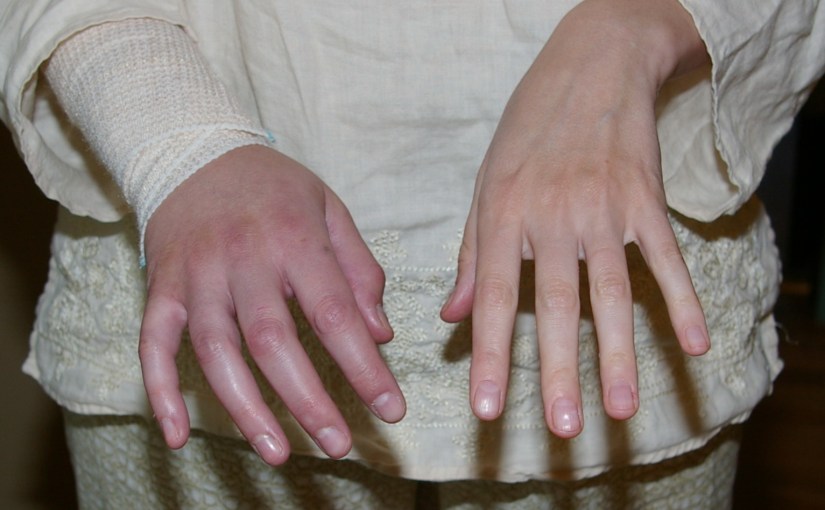
When I developed tendinosis, I was essentially forced to put down my pen permanently. I learned to type while wearing splints and straps, which greatly hampered by hand mobility. I learned to keep my keyboard in my lap. I also found out that taking breaks was a necessity if I wanted to be able to tie my shoes after day of writing. I still like to go on location and leave the confines of my cramped cluttered computer room, and spent many years unable to do so. As soon as I could afford to do so, I invested in a laptop which essentially had no other purpose than to take me places to people watch, world build, and write when away from home.

Eventually, further modifications to my writing technique were required. Between an office job and writing, I was doing more typing than my arms could handle, even with splints and breaks. A writer at heart, I have never been a particularly good speaker. I could barely type quickly enough to keep up with my mind, and my voice lagged woefully behind. Although I had been aware of voice recognition software since the mid-1990s, I had no particular interest in using it for quite some time. It was inaccurate. It wasn’t my “style.” I didn’t have a computer powerful enough to run it anyway. But these were all excuses. I’m a slave to my muse, and have learned to adapt. Starting in 2000 voice recognition became my primary method for writing initial drafts.

For a while these necessary adaptations resulted in my writing being more restricted. It could only happen in the same room, to avoid altering the acoustics and messing with the software.  I had to be alone or it felt like someone was reading over my shoulder. With time and practice, dictation came easier, and I no longer need to banish all living beings from the room, floor, or house. Changing my methods resulted in better control of my tendonosis which has made it possible for me to do a little handwriting or typing on a tablet if I want to work off-site. The path wasn’t easy, and I often resented the need for it, but in the end, it’s made me a better writer and stronger person.

This article was written using Dragon NaturallySpeaking and revised using a split floating keyboard once known as Interfaces by Cramer.