Something Familiar – Teaser 5

The fifth chapter of Something Familiar is now available on Curious Fictions (along with chapters one through four) for those who need a try before you buy option.

Cover of the novella Something Familiar.

If you read any of the teasers and want to find out more, Something Familiar is available in a variety of formats and from many retailers. You can also check with your favorite bookseller or online store, as it is available outside the US as well.

For those who’ve already bought it, thank you for your support.

Re-Embracing an Artist’s Discipline

I spent the last few days without internet or phone service, with nothing to do but play in the water with my family, read (on the bench swing or while sitting on a chair plopped in two feet of water), write, and think. While it was a little frustrating to not drop into my usual habits of spending time online, it was super productive and helped me develop my career plan for the next twelve months.

As both a freelancer and an indie writer, I need to be responsible for driving both of my careers. Neither will progress without my direct action. Having a plan is really helpful for focusing my efforts in a useful direction. Without a plan, most careers merely tread water and many eventually flounder. This doesn’t necessarily need to be a formal structured business plan, but it definitely needs to be more defined than “write some stuff and get published” or “get new clients.” How much detail you include really depends on what your career needs at this moment, and what works best for you. We aren’t all wired the same. I’m goal-oriented and very fond of lists, so my plan is a table with lists of the activities or goals I need to complete each month; freelancing is in one column and fiction writing is in the other.

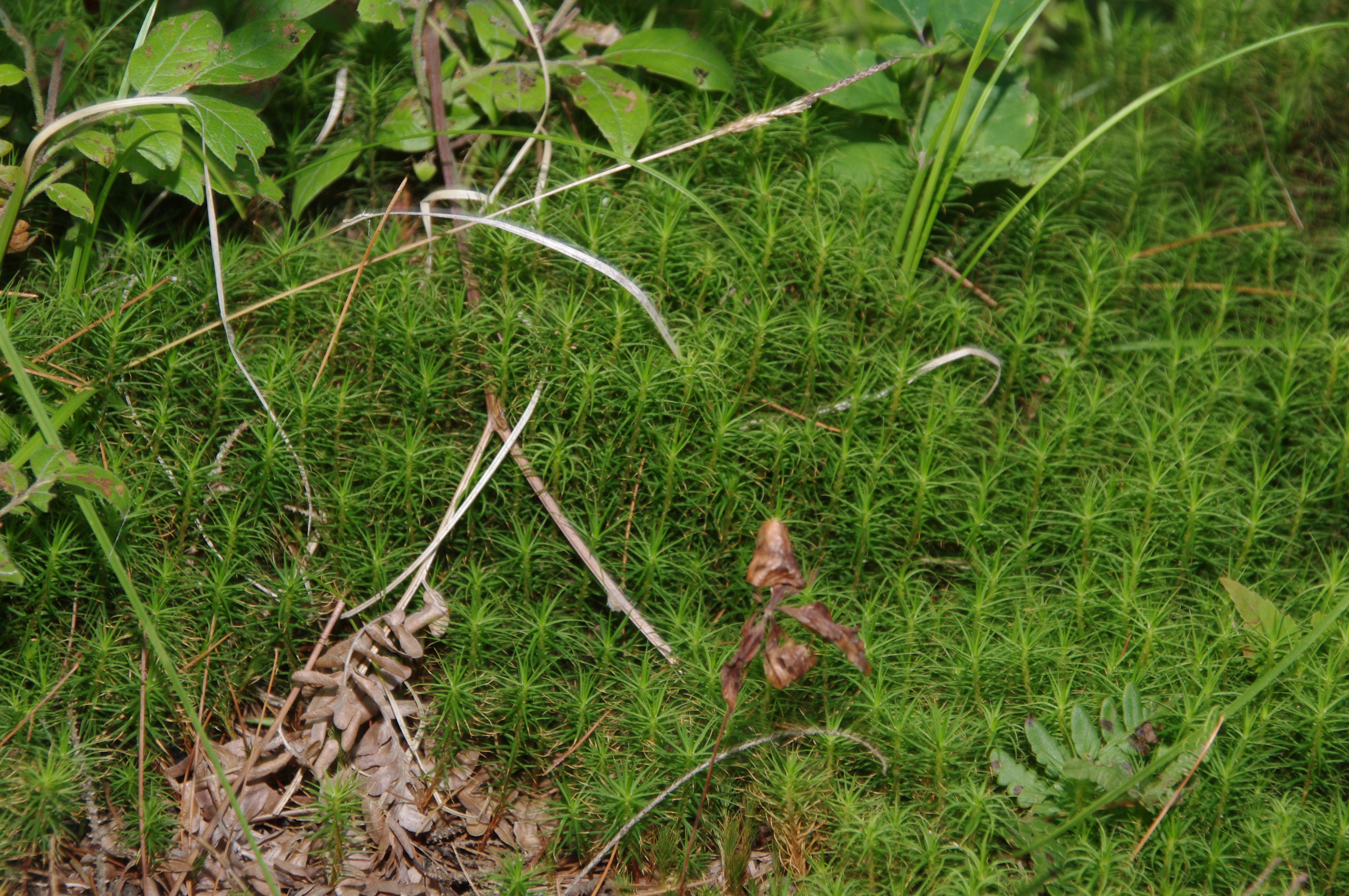
Giant moss native and endemic to North America.

While preparing for and attending Diversicon back in July, I did some research on gaining traction and becoming successful as an indie writer. My primary focus in this regard is stepping up my game. I used to be very disciplined about my writing goals, but that fell away when I was burned out from a crappy work environment. The chaos of going through a career change prevented me from establishing a routine. I’ve been working on returning to my old level of discipline with original world and fanfic challenges. My work life has stabilized and my kids go back to school in September, so I’m ready and excited to step up my fiction writing.

Golden patterns of sunlight reflected onto the sandy bottom of a lake.

In the next few weeks I’ll be plotting out the two sequels I have planned for Something Familiar. I’ll also be picking up regular writing sprints to get the creativity flowing and generate some stories that I can ideally share here and on Curious Fictions. When the kids return to school, I’ll be focusing on writing the first one with a fast track plan for publication before the end of the year. It’s well within my abilities, and I’m eager to make this happen.

Buckle up; we’re going for a ride!

Critique – A Look At Process

Critique is an examination of a story’s components and how they work together, in order to identify strengths and weaknesses. The goal is to help the author tell her story in the best way she can. Copy editing, identifying grammatical and structural language problems, isn’t the same as a critique, though critique may include copy editing. Whether you’re new to it or you’re trying to change your process, critique can seem a lot more daunting than it really is.

Most of the critique process is going to happen on your own, as you read the manuscript and record your feedback. There are a lot of right ways to do this, and your process may vary depending on the circumstances. I like to receive detailed in-depth feedback, so that’s what I try to give. I prefer to have a hard copy of the manuscript, and I promise I will scribble on it. I almost never read without a pen in hand, because I may not remember where that missed comma was later. Being able to mark the spots in the story that I want to address is more efficient than having to tell the writer, “the third sentence in paragraph five muddies your dialogue.” This also allows me to mark minor problems, or parts that I really liked, without a lot of extra work. Tracked changes don’t always transfer from one word processor to another, or even to different versions of the same program.  While I like the idea of going paperless, I only use it when I’m critiquing by e-mail, and I prefer to use Google Docs on suggestion mode in those situations.

In my comments, whether written or spoken, I make a point to focus on the writing, not the writer. I would never say, “you’ve obviously never been camping before.” Instead I might note that the camping scene felt artificial or vague, as well as pointing out specific details that are inaccurate. We all have bad days where we sound clueless, even when we’re the leading expert on the subject. Also, it does no good to attack another writer. It hurts feelings, among other things, and it’s the writing you’ve been asked to judge, not the person.  It is as important to point out what worked and what you liked, as it is to point out the flaws. This makes the feedback more palatable while ensuring the writer that they did something right.

Once in a while I’ll be asked to critique something that ends up not working for me. It may be that I’m not the right audience. To counteract this, I remind myself why I’m doing the critique. I review my personal philosophy on critiquing. If I reach a point where I loathe reading the story and can’t point out anything positive, there’s a good chance I don’t get it or I’m not the target audience. Forging ahead with a critique will result in something that won’t help the author; there’s a good chance you’ll come off as harsh and you’ll look like an idiot. I’ve done this once, and I still feel bad about it. Learn from my mistake. If you’re finding lots of negative things and very few positive things, it may be best to bow out of the critique.

I use a three-step approach for most critiques.

Step 1: Read the story and record my first impressions. I’ll also note if I liked the story or not, since this will likely influence the rest of the critique. While I have a pen in hand, I usually only mark copy problems at this point. You can use whatever editing symbols you like, as long as the recipient is going to be able to tell what you mean. In the critique groups I’ve been in, we’ve mostly used Associated Press standard proofreading symbols (which are pretty easy and intuitive, and you can find them with a Google image search).

Step 2: Let the story sit for several days or longer, if possible, before reading it again. I use a different colored pen this time; because I’m likely to make more comments on the manuscript for this round, I usually avoid red. It makes my markup look less scary. While reading, I may make notes that will feed into my formal critique.

Step 3: Write up the critique. This is the formal report with whatever I found worth mentioning. When giving critique in person, I pretty much read what I’ve written. There are two benefits to this. The first is that I already have carefully chosen words when breaking bad news, rather than whatever flies out my mouth. Second, the recipient doesn’t have to take notes on everything I say, and can more actively listen. I made a form for my critiques because it’s more organized than a random essay response, and it reminds me to give feedback in areas I may forget about.

If you’re new at giving critiques, try a few different methods and see what works for you. Think about what you’d like to get back, other than glowing accounts of your brilliance, and structure your feedback in a way that provides guidance to the author. Give yourself plenty of time to review your critique before you give it, so you can adjust your own language to be appropriate. Everyone starts out not knowing how to do this, and with practice it gets better.


The two critique forms I’ve used most often are attached here as downloadable ODT files. Feel free to modify and use these to fit your needs. Most word processors will open ODT, if yours won’t, and you need a different format, please let me know.


Critique Philosophy

Most artists don’t improve and grow without some external input; it’s often tough to identify weaknesses in your own work. Critiques are one of the best ways for artists to improve, because they provide the response of an audience, showing you what didn’t successfully transfer from your internal context to the rest of the world. For writers, one of the best ways to get constructive feedback on your writing, is to agree to provide it in return. This is the foundation for most writers’ groups. Giving critique is an art form in itself, and for many it’s not intuitive. Like anything, it gets easier with practice.

You may wonder if there are benefits to learning how to do critique, other than as an exchange. Plenty of authors don’t care to take the time to develop this set of skills. While it’s true we all go about our art differently, most of us get a pretty significant boost in our writing skills when we collaborate this way. Critiquing others’ work can establish a group of artistic peers. It’s handy to have people who understand you when you’re venting about the publishing business, troubleshooting a story, or want to celebrate a success. You’ll exchange more than just feedback over time; I get a lot of market information from my network of peers. The biggest gain from learning to critique, is mindfulness of writing craft in your own work. This results in increased ability to improve a your own drafts and revisions without external aid.

Going into a critique, it’s a good idea to check your motivations. Is your goal to help someone tell the story they’re aiming for? This is a great starting point. Are you doing it solely to get feedback in return? If so, are you willing to give as good as you expect to get? There are few things worse than a writer who provides four sentences of non-specific feedback on a seven thousand word short story, but expects two pages of formal critique and an hour of detailed discussion on their partial chapter. I’ve been in groups with these people, and it creates unpleasantness. If you’ve gotten feedback you didn’t like or disagreed with from a person whose work you are critiquing, you need to find a way to let go of any petty hurt feelings so you can approach their piece objectively. Spite critiques suck. I’ve gotten these, and they make you look like a spoiled child. If you don’t thing you can be objective, request an extension or recuse yourself.

If your goal is to hurt feelings, tear other writers down, or make yourself feel superior, you’re doing it wrong. Critiquing isn’t about toughening up your fellow writers, though there are writers and workshops that play this card. Writing and self confidence use different skills without significant crossover. Claiming you’re just trying to help, while reducing a fellow writer to tears or rage is both abusive and a big fat lie.

At the core of your critique process, you need to have respect, both for the writer and the effort they’re making to improve. It’s a vulnerable position to be in, allowing someone to find all the problems in your stories, the problems with your writing. Done right, the benefits are enormous on both sides of the coin.


The two critique forms I’ve used most often are attached here as downloadable ODT files. Feel free to modify and use these to fit your needs. Most word processors will open ODT, if yours won’t, and you need a different format, please let me know.
Something Familiar Now Out in Trade Paperback

You can now pick up Something Familiar in a variety of formats from a variety of sources:
Lulu ePub and trade paperback
iBookstore
Barnes & Noble Nook and trade paperback
Amazon Kindle and trade paperback
Rakuten Kobo (ePub)

If you read and enjoy Something Familiar, it would be amazing if you could put up a review (at whatever site you prefer), as it will help me reach a wider audience.

Cover of the novella Something Familiar.

Available in all Major Digital Markets

Something Familiar has finally hit Amazon. You can now pick it up in the following formats:
Lulu ePub
iBookstore
Nook
Kindle
Rakuten Kobo (ePub)

I should have the print proof any day now, and once I can confirm it looks good, it will be available in paperback as well.

If you read and enjoy Something Familiar, it would be amazing if you could put up a review (at whatever site you prefer), as it will help me reach a wider audience.

Cover of the novella Something Familiar.

Digital Book Cascade

The cascade of eBook availability continues. Something Familiar is now available in the following formats:
ePub 
iBookstore 
Nook

As soon as the print proof is approved, it will be available in paperback as well.

If you read it and enjoy it, I would love it if you could put up a review (at whatever site you prefer), as it will help me reach a wider audience.

Cover of Something Familiar.